Jacob Amengor describes the vision of Ghana’s 24H+ Programme and considers how it may impact water security.
Water is the lifeblood of any economy, and as Ghana seeks to embark on one of the most ambitious national transformation programmes in recent memory – dubbed the 24H+ Programme – water will be impacted, quietly but decisively determining the programme’s success or failure.
The vision of the 24+ Programme is to unlock Ghana’s productive potential through round-the-clock activity in agriculture, manufacturing, logistics and services. From the vast Eden Volta Breadbasket Project to bustling Wumbei Industrial Parks, Ghana is preparing to power a new era of exports, employment and inclusive prosperity. But there is one crucial question: can our water systems handle this transformational agenda?
The quiet risk behind this transformation
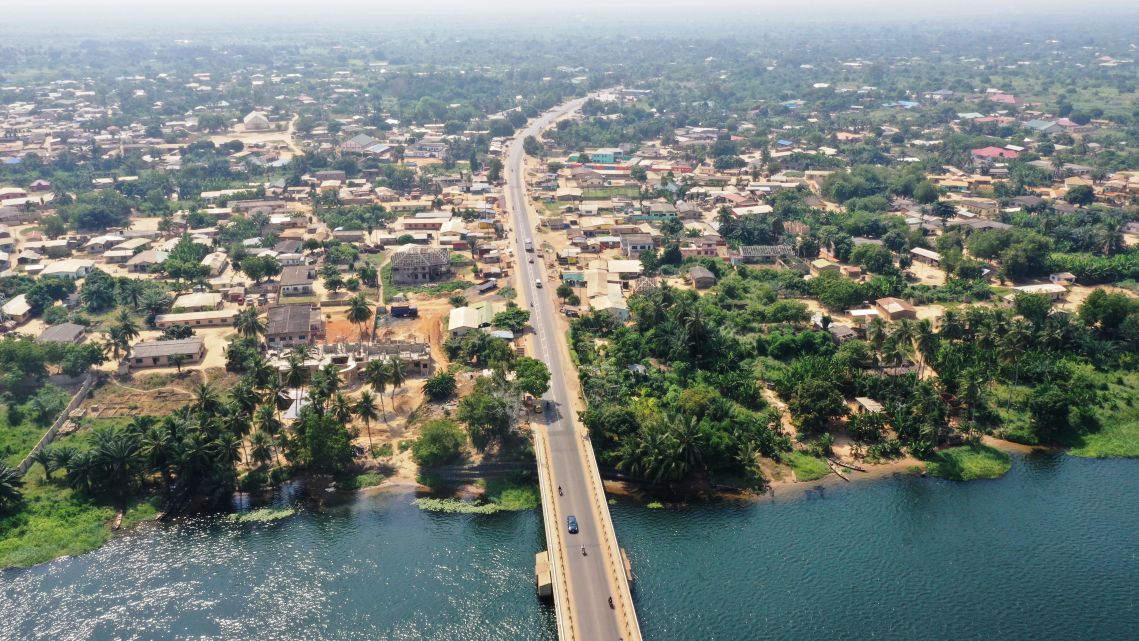
Much of the scaling up of irrigation, agro-processing, urban farming and industrial activity proposed by the 24+ Programme is clustered around the Volta River – Ghana’s most vital freshwater resource. This river is not just a geographic feature; it is the lifeline for millions of Ghanaians.
The Kpong Water Treatment Plant (WTP) is one of the nation’s largest, drawing its raw water directly from the Lower Volta and suppling drinking water to much of Greater Accra and Tema. So, any deterioration in the river’s quantity or quality, whether from agrochemicals, untreated effluent or poor sanitation in upstream communities, has the potential to impact public health challenges and jeopardise the delivery of water, sanitation and hygiene (WASH) services.
Ghana has approximately 54 billion m3 of annual renewable water resources. Despite this apparent abundance, however, per capita renewable water availability has fallen sharply, placing the country under the UN’s water stress threshold of 1700 m3 per person per year. This paradox – abundance in aggregate, but scarcity at the individual level – reflects not a lack of resources, but weaknesses in foresight, coordination and governance.
Eden Volta project
More than 2 million hectares of irrigation under the Eden Volta project will intensify water abstraction, potentially impacting communities and the environment further downstream. Large-scale agriculture and the use of fertilisers and pesticides could lead to nutrient runoff, increasing the risk of algal blooms and eutrophication in water bodies, degrading water quality, harming aquatic life, and limiting water for human consumption and recreation.
Wumbei Industrial Parks
The Wumbei Industrial Parks vision also comes with risks. If not carefully regulated, industrial effluents may be discharged, contaminating water supplies with chemicals and heavy metals, posing health risks and complicating water treatment efforts for nearby communities.
Climate variability is already altering rainfall patterns and evaporation rates, making flow levels in the Volta River less predictable, threatening long-term water reliability. These shifts could undermine the sustainability of water-dependent projects and place additional pressure on water management systems.
These risks are not hypothetical. Other countries have faced, and are still facing, similar challenges when economic expansion has outpaced environmental safeguards. Ghana must not repeat these mistakes. As the 24H+ Programme accelerates economic activity, strong water management and environmental safeguards must move in lockstep to prevent the trading of water resources for economic growth.
Proactive measures for water security
To proactively secure Ghana’s water supply in the face of the 24H+ Programme, especially given the scale of agricultural, industrial and infrastructural expansion, Ghana must adopt a multilayered water security strategy. This strategy must simultaneously address water quantity, quality, governance and climate resilience.
Aligning WASH with Integrated Water Resources Management
While Integrated Water Resources Management (IWRM) focuses on the sustainable governance and allocation of water resources across domestic, industrial, agricultural and ecological uses, WASH services represent the most immediate way people experience water security in their daily lives. Inadequate sanitation and hygiene can lead to the contamination of water sources, posing serious risks to public health and environmental sustainability. For IWRM to be truly effective and enduring, WASH must be fully integrated into catchment-based planning. This includes incorporating sanitation infrastructure into basin-level water allocation decisions, ensuring that latrines and waste disposal systems are sited away from water bodies, aligning hygiene promotion with water quality monitoring, and fostering coordinated action among key institutions, such as Ghana Water, the Community Water and Sanitation Agency, district assemblies, the Ghana Environmental Protection Agency, and the Water Resources Commission.
Watershed protection and land use zoning
Protecting watersheds and zoning agricultural lands are critical for maintaining consistent water flow and preserving quality downstream. To achieve this, it is important to legally designate and safeguard riparian buffer zones along the Volta River and its tributaries. Additionally, land use zoning should be enforced to restrict agriculture, mining and construction activities within the Volta Basin. Promoting reforestation and agroforestry in upstream areas will further enhance the ecological integrity of watersheds, and reduce the risk of pollution and sedimentation in the basin.
Promote water-efficient agriculture
Water-efficient agriculture helps conserve water resources, enhances productivity and supports long-term sustainability in irrigation-dependent areas. This is especially important as large-scale irrigation projects could significantly deplete water sources if not managed properly. To address this, irrigation subsidies should be tied to the adoption of climate-smart practices, encouraging farmers to implement sustainable methods. Deploying smart irrigation sensors to monitor soil moisture can further optimise water use, while scaling up the use of efficient drip and sprinkler systems over traditional flood methods will reduce waste and depletion.
Water quality monitoring and early warning systems
Water quality monitoring and early warning systems are essential for detecting and responding promptly to contamination threats, thereby safeguarding public health and ensuring the reliability of water supply systems. As industrial and agricultural activities expand, they increase the risk of pollution to critical water intakes and aquaculture. To mitigate these risks, automated water quality monitoring stations should be installed along key sections of the Volta River, and robust early warning systems developed to detect chemical spills, algal blooms and turbidity spikes. Additionally, enforcing pollution buffer zones around agro-processing facilities and chemical storage sites within the river basin will help prevent contaminants from entering water bodies.
Reuse and recycle industrial water
Recycling and reusing water in industrial operations is a cost-effective and environmentally sustainable way to reduce pressure on freshwater sources. This is especially important as the development of industrial parks under the MAKE24 initiative could overburden local water supplies if sustainable practices are not adopted. To address this, strict enforcement of regulations requiring onsite wastewater treatment and reuse for non-potable purposes, such as cooling and cleaning, are essential. Additionally, offering targeted incentives for the adoption of greywater recycling systems in industrial zones will motivate industries to operate within set sustainable environmental limits.
Strengthen institutional coordination and IWRM
Effective institutional coordination and the implementation of IWRM are essential for coherent policy enforcement, efficient resource use and sustainable water governance. Weak coordination among agencies often results in overlapping responsibilities and fragmented responses to emerging challenges. To address this, a dedicated 24H+ Programme Water Management Plan should be established to align the activities of key stakeholders under a unified framework. This plan should define clear roles, streamline communication channels, and set joint accountability targets. In addition, embedding IWRM through catchment-based planning and enhancement of River Basin Committees will enable context-specific decision-making and promote collaboration between local authorities, traditional leaders and water users.
The bigger picture
Water is not just a resource; it’s the enabler of transformation. Without reliable, clean water and strong sanitation systems, agriculture collapses, factories halt, healthcare facilities struggle to maintain hygiene, children miss school because of illness or water-fetching duties, and tourism declines as destinations lose their appeal and safety. But with IWRM and sustainable WASH services, the 24H+ Programme can deliver both growth and resilience, feeding families, creating jobs and keeping taps flowing. The beauty of the 24H+ Programme approach lies in its systems thinking. Every value chain is connected – and water should not be left behind.
Ghana stands at a crossroads. One path leads to accelerated production, improved exports and a stronger economy. The other could lead to water stress, high water treatment costs and competing demands between different water uses. The choice is not binary. With foresight, science and coordination, Ghana can have both: a thriving 24-hour economy and a water-secure future.
The author:
Jacob Amengor is a Water Quality Analyst at Ghana Water and Committee Secretary for the Ghana GM.
The author would like to acknowledge the contributions of Ewurabena Yanyi-Akofur, WaterAid Ghana; Professor Sampson Oduro-Kwarteng, KNUST-Ghana; Vida Duti, IRC Ghana; and Emmanuel Ahenkorah, GWL Ghana.