
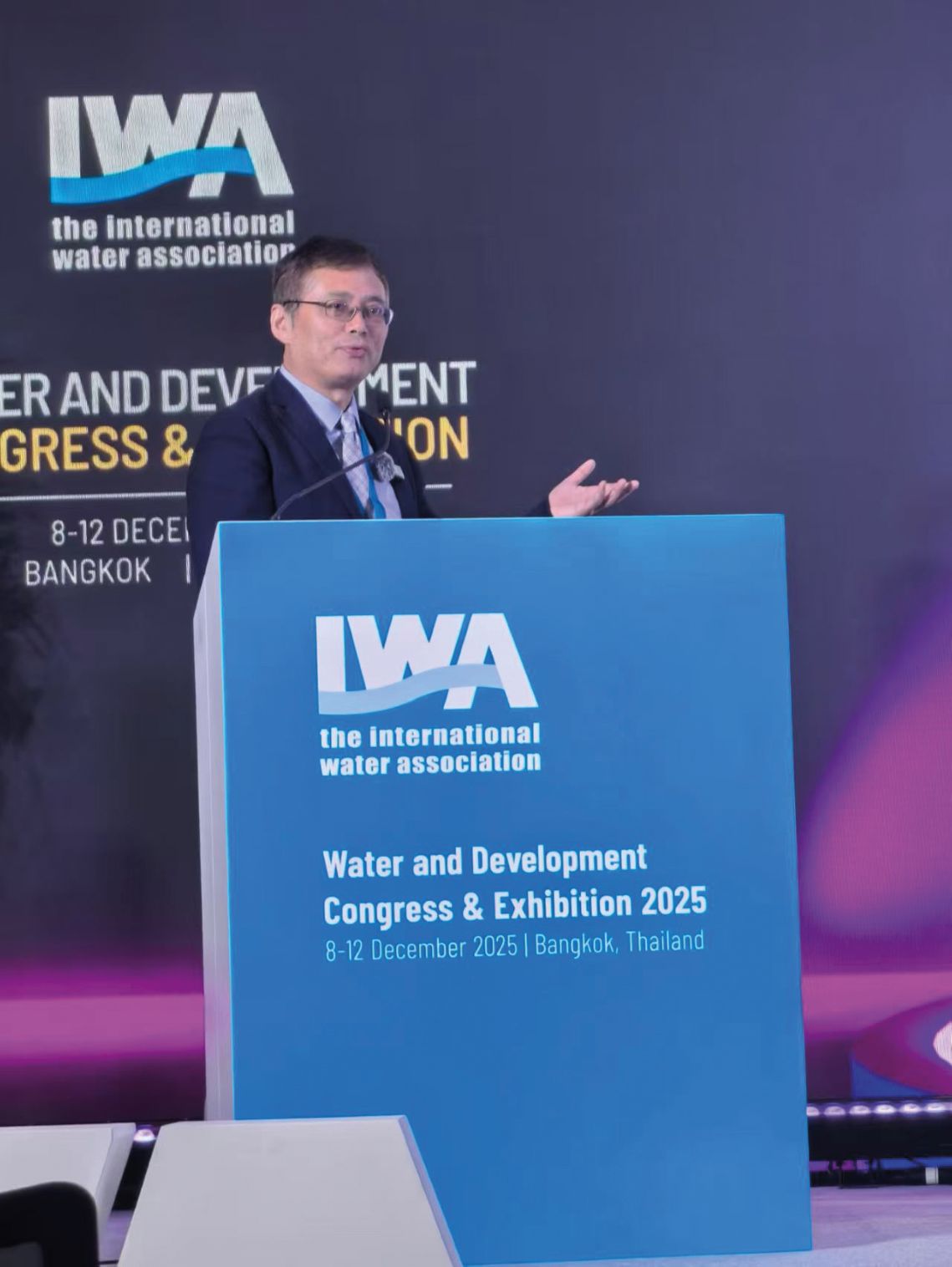
Impacts of contaminated well water on kidney health in Sri Lanka are being tackled through work supported by Chinese research. Professor Min Yang explains how the project has developed.
In the North Central Province of Sri Lanka, kidney disease has been impacting otherwise healthy farmers, evolving into a public health crisis. Chronic Kidney Disease of Unknown aetiology (CKDu) has afflicted tens of thousands of people in these agricultural communities, with some estimates suggesting around 150,000 people were affected by 2015, with a 3% annual mortality rate. As villages grapple with the loss of breadwinners and mounting medical costs, researchers from Sri Lanka and China are unlocking CKDu’s secrets and delivering relief.
A mysterious epidemic in South Asia’s heartland
First identified in the 1990s, CKDu emerged as an epidemic in Sri Lanka’s dry-zone farming heartland, primarily affecting middle-aged paddy farmers. Unlike typical chronic kidney disease, CKDu strikes those with no history of diabetes or hypertension. Patients endure a gradual loss of kidney function, often progressing to fatal kidney failure. By the late 2000s, hospitals in the North Central Province were recording the nation’s highest rates of chronic renal failure.
Epidemiological studies found that the patients are mainly adult farmers living in remote rural areas. Over 98% of households in the worst-affected regions rely on groundwater as their primary drinking source – without treatment or filtration – suggesting a possible clue to CKDu’s origin.
Over the years, researchers have floated multiple hypotheses: exposure to agrochemicals from intensive fertiliser use, heat stress and dehydration, or contaminated well water. Yet for decades the exact cause of CKDu remained fiercely debated and patients continued to suffer without a clear solution.
A joint quest for answers
In August 2013, an urgent call for collaboration finally bridged continents. Dr S K Weragoda, a water board official in Sri Lanka and a former trainee of a Chinese water research programme, contacted me appealing for help to investigate CKDu. Recognising the gravity of the situation, my team quickly partnered with Sri Lankan authorities to devise a response.
In 2014, Chinese experts travelled to Sri Lanka’s CKDu hotspots to conduct field visits and met Sri Lankan leaders, securing high-level support for a joint effort. By March 2015, a memorandum of understanding formalised the commitments of Chinese Academy of Sciences (CAS) and Sri Lanka’s Ministry of Urban Development & Water Supply (MUDWS), establishing the Joint Research and Demonstration Center (JRDC) on CKDu, dedicated to investigating the disease and piloting solutions.
From well to laboratory
The Sino-Sri Lankan team launched an intensive investigation into CKDu’s causes. Early epidemiological assessments strengthened the suspicion that CKDu was associated with the consumption of well water. The team formulated a hypothesis: something in the shallow groundwater of endemic regions was slowly poisoning kidneys. To test this, scientists from multiple disciplines joined forces under a unified research framework.
One of the first steps was a comprehensive water quality survey across affected regions. Laboratory analyses revealed that wells in the worst-hit communities contained elevated levels of fluoride (F) and hardness-related ions like calcium (Ca), magnesium (Mg), and sodium (Na). These naturally occurring constituents appeared in much lower concentrations in wells of unaffected areas. Fluoride was a prime suspect, as chronic high fluoride intake is known to cause kidney damage in animal studies and is toxic to renal cells.
To probe the impact of tainted well water on human kidneys, the team turned to a cutting-edge kidney organoid model. Kidney organoids are miniature, lab-grown kidney tissues that mimic real kidney structure and function. The researchers exposed these organoids to well water samples from a high-incidence village, a low-incidence village, and a control (safe laboratory water). Organoids bathed in water from the high-incidence area showed significantly reduced expression of key kidney cell markers – indicating impaired kidney cellular function. In contrast, organoids exposed to low-incidence well water or clean water did not show this damage.
To pinpoint which components of the water were causing harm, the scientists conducted controlled ion exposure experiments – recreating the water chemistry in the lab by formulating mixtures of fluoride, calcium and sodium ions at concentrations similar to those measured in patients’ wells. When kidney organoids were exposed to these ion mixtures – especially the higher concentration mix (0.5 mg/L fluoride, 50 mg/L calcium, 2000 mg/L sodium) – the organoids exhibited a sharp decline in reabsorption function markers. The combination of fluoride and hardness ions was clearly toxic to kidney tissue. This finding aligned with epidemiological observations in Sri Lanka, where hard water with high fluoride content had long been suspected as a culprit. Armed with this scientific evidence, the team moved swiftly to find a solution.
Solar-powered electrodialysis
Conventional water treatment infrastructure was lacking, with nearly 74% of rural community water schemes in Sri Lanka having no form of water treatment. A photovoltaic electrodialysis (PV-ED) water purification system provided an innovative point-of-use solution. Electrodialysis (ED) is a technology that uses electrically charged membranes to selectively remove ions from water. By coupling this with solar panels, the system can run off grid.
In 2023-2024, prototype PV-ED units were built and deployed in a pilot programme. The units were installed in 16 households of CKDu patients, with each unit connected to the family’s own well. The performance of these field tests showed promising results, with units consistently removing about 70% of the fluoride and other target ions. This typically brought fluoride concentrations down to safe drinking standards, while also softening the water by reducing hardness. Importantly, the treated water was put through organoid tests, and kidney organoids exposed to treated well water showed recovery, with increased expression of proximal and distal tubule markers compared with exposure to untreated water.
Residents reported immediate benefits. While long-term health outcomes are still being monitored, the PV-ED pilot has provided a lifeline for communities that had few alternatives. The solution is also cost-effective: powered by sunlight and with minimal moving parts, the systems have low operating costs. Maintenance and training are being handed over to local stakeholders, ensuring the project’s benefits are sustained.
Empowering communities and expanding impact
Beyond the laboratory and household pilots, a key aspect of this initiative is building local capacity and community ownership, through training, knowledge transfer, and demonstration of scalable solutions. To tackle CKDu in the long-term, the wider rural water supply challenge must be addressed. Sri Lanka has more than 4000 community-based water supply organisations (CBOs) managing village water schemes, yet nearly three-quarters lack any water treatment, because of limited funds, technology or expertise. In response, the project introduced the concept of ‘Ganlu Stations’ – a sustainable, community-run water treatment model. Four CBOs in affected regions were selected as demonstration projects. Each received investment to install treatment technology, along with training for local operators, and an affordable financing plan for maintenance.
The collaborative network forged through the CKDu project is now extending to tackle similar water quality challenges beyond Sri Lanka. In Bangladesh, where arsenic in groundwater is a notorious health hazard, the Research Center for Eco-Environmental Sciences (RCEES) team has partnered with the Bangladesh University of Engineering and Technology (BUET). Meanwhile in Nepal, plans are in motion to install a water purification plant in the town of Dhulikhel. These expansions demonstrate how the scientific insights and technologies from the CKDu project can benefit millions of people facing water-related health risks across South Asia.
A blueprint for collaboration and action
What began as a desperate plea to increase understanding of kidney disease in rural Sri Lanka, has evolved into a model of international collaboration in water and health. By integrating scientific research, innovative technology and community engagement, the Sri Lanka CKDu initiative offers a solution-focused template for similar crises. The combination of rigorous field science and practical engineering yielded a targeted intervention that is already improving lives. Equally important, the project invested in local human capacity, ensuring that knowledge and skills will remain in the community.
There is cautious optimism that the next generation of Sri Lankan rural farmers might escape CKDu. Government agencies and international partners are closely watching the outcomes and are considering scaling up the approach nationally. Continued investment will be crucial. But the success to date underscores the payoff.
The key lesson is the power of partnership. Solving a complex environmental health challenge like CKDu required bridging disciplines and borders. In an era when many water and health problems transcend boundaries, this provides an inspiring example of what international cooperation can achieve. This initiative is not only saving lives today but also lighting the way toward a future where no-one is left drinking water that slowly kills.
The author:
Professor Min Yang is a researcher at the Research Center for Eco-Environmental Sciences, Chinese Academy of Sciences, China.
The cooperation on CKDu in Sri Lanka was the focus of his keynote presentation during the IWA Water and Development Congress & Exhibition in Bangkok, Thailand, in December.