
IWA’s 2025 Water and Development Congress & Exhibition provided a rich environment for professionals to come together to focus on innovation for low- and middle-income countries. We share some of the event’s highlights.
As 2025 drew to a close, participants flocked to Bangkok, Thailand, to take part in IWA’s 2025 Water and Development Congress & Exhibition (WDCE), hosted at the Queen Sirikit National Convention Centre. Building on the success of the 2023 edition held in Kigali, Rwanda, the event attracted record delegates for a comprehensive programme focused on the needs and interests of low- and middle-income countries.
Running from 8-12 December 2025, the event was co-organised with the Asian Institute of Technology, with key partners including the Asian Development Bank (ADB), South Africa’s Water Research Commission and the World Bank. It brought together delegates, exhibitors and exhibition visitors from around the world, and featured highlights including a High-Level Summit, the announcement of the winners of IWA’s Water and Development Awards, and the launch of the Asian Development Bank’s Asian Water Development Outlook 2025 (AWDO) report.
Regional relevance
Asia is experiencing rapidly escalating water-related risks, including severe floods, droughts and storms, contributing to enormous economic losses. Recent UN analysis shows that the Asia-Pacific region accounts for nearly one third of global weather-, climate- and water-related disasters, generating nearly one third of associated economic losses. Already, broader natural hazards are costing the region around $780 billion each year. With the impacts of climate change set to create even greater challenges, it was appropriate that WDCE 2025 brought utility leaders, policymakers and innovators to the region from around the world under the theme of ‘Water, sanitation, and innovation – pathways to progress and a resilient future’.
Highlighting the resonance of the theme and location of WDCE 2025, IWA President Hamanth Kasan said: “This is special, firstly because we are in Asia. Asia has particular water and sanitation challenges, especially the impacts of climate change and resilience, and there is amazing work being done here that will be shared with the rest of the world for us all to learn from. It is also special because of the theme of this event… I believe we are on the cusp of making very significant progress through the experts who will be here and the innovative sessions we have put together, including a number of special forums that will encourage dialogue and the exchange of ideas, enabling everyone to take something home and make a difference in their countries.”
Dynamic programme
With more than 100 sessions, the programme focused on innovation for low- and middle-income countries. It was built around five thematic tracks: Ensure safe drinking water: Innovative approaches for treatment and supply; Advancing wastewater treatment and sanitation services: Sustainable solutions for all; Smart water management: Integrated approaches for effective water management and planning; Enhancing utility management and operations for sustainable growth; and Strengthening governance and financial systems for long-term development.
The programme provided a vibrant meeting ground for collaboration and idea sharing, inspiring actionable strategies to strengthen global water security and climate adaptation. Attendees engaged in an exciting programme that blended visionary keynotes, expert panels, in-depth technical sessions and interactive workshops. These were all designed to foster meaningful dialogue and provide extensive networking opportunities bridging disciplines and sectors, encouraging creative partnerships and breakthrough thinking.
Keynote speakers
WDCE 2025 featured an impressive array of keynote speeches. During the opening ceremony, Jay Bhagwan, Water Research Commission, South Africa, shared insights into the real-world opportunities to advance alternative sanitation options.
The first keynote in the main programme came from the Right Honourable Premier of Sarawak, Malaysia, who set out a forward-looking vision for the Malaysian state’s water, energy and sustainability agenda. Yvonne Magawa, Executive Director of ESAWAS Regulators Association, highlighted the pivotal role of regulators in ensuring balanced, accountable and effective water and sanitation services. Roshan Shrestha, of the Gates Foundation, gave a keynote on the advance of inclusive sanitation over the past two decades. Professor Min Yang, of the Research Center for Eco-Environmental Sciences, Chinese Academy of Sciences, China, gave a keynote on cooperation between China and Sri Lanka around water-related health issues. Fan Zhang, from The World Bank, gave a keynote on continental drying, current understanding of the global water crisis and solutions for a resilient future. Kate Medlicott, World Health Organization, gave a keynote on advancing the global water and health agenda, and Joel Goldenfum, Scientific Committee on Adaptation and Climate Resilience – Rio Grande do Sul, Brazil, gave a keynote on science as an instance of governance in a post-disaster reconstruction plan.
Each keynote was followed by a panel discussion, bringing together utility leaders, policymakers, regulators, development partners and innovators to explore practical implications and regional perspectives. Panel themes included water supply and sanitation regulation, advancing the global water and health agenda, and the global water crisis of continental drying and potential solutions for the future.
Opening ceremony and awards
At the opening of WDCE 2025, Congress President Thammarat Koottatep, Professor at the Asian Institute of Technology, Thailand, said: “I am honoured to welcome the international water community to Thailand for the 2025 Water and Development Congress & Exhibition. Thai hospitality reflects our warmth and openness, and hosting this event allows us to connect global expertise with regional experience. As a water professional, I am excited to engage with colleagues worldwide and showcase Asia’s innovation and commitment to advancing water solutions.”
Launching its AWDO report at the opening of this much-anticipated event, the ADB highlighted that more than 60% of Asia and the Pacific’s population – about 2.7 billion people – have been lifted from extreme water insecurity over the past 12 years. However, these hard-won gains are threatened by accelerating environmental decline and a major financing gap.
A further highlight of the opening ceremony was the presentation of the 2025 IWA Water and Development Awards to three exceptional individuals. Professor Evan Thomas, of the University of Boulder Colorado, USA, received the IWA Water and Development Award – Research in recognition of his pioneering integration of research, technology and enterprise to deliver sustainable and accountable water security for millions.
The IWA Water and Development Award – Practice was presented to Professor Meera Mehta, of CEPT University, India, for her transformative leadership in water and sanitation governance and finance across low- and middle-income countries.
The IWA Water and Development Award – Practice was also presented to Jay Bhagwan. He received recognition for his visionary leadership in advancing non-sewered sanitation innovation through South Africa’s Sanitation Technology Enterprise Programme (SASTEP).
Exhibition showcase
The exhibition space at WDCE 2025 served as a dynamic hub for innovation, partnership-building and knowledge exchange. Across exhibits and the Business Forum programme, solution providers, utilities, start-ups and development organisations demonstrated technologies and approaches across areas such as sanitation improvements, digital transformation, climate resilience and operational efficiency. The space provided an opportunity to find out more about IWA at our busy booth, as well as hosting the extensive poster presentation display, out of which six outstanding contributors were recognised in the Congress Best Poster Awards: Mooyoung Han, Seoul National University; Pragyan Nayak, Ernst & Young India; Masaaki Kitajima, University of Tokyo; Sabrina Rashid Sheonty, Tetra; Elorm Noel Kwamivi, Ghana Water; and Maria Wirth, alchemia-nova.
Special forums
Alongside the core technical programme, the Congress programme featured a number of special forums to advance key agendas:
High-Level Summit on Water Security and Resilience: The High-Level Summit concluded with a strong sense of urgency and alignment around the need for coordinated, forward-looking action on water security and resilience. Across discussions on regional risk, urban service delivery and flood management, a clear message emerged: addressing today’s escalating water challenges requires political leadership, inclusive governance and investment approaches that move beyond legacy systems. The Bangkok Communiqué from the Summit captures this shared commitment – setting out priorities to accelerate progress, strengthen resilience and align action towards a more innovative, equitable and sustainable water future.
International Water Regulators Forum: The 10th International Water Regulators Forum highlighted the critical leadership role of regulators in building climate-resilient water and sanitation systems. The forum underscored the need for empowered, independent and data-driven regulation to drive reform, enable investment and respond effectively to climate, governance and financial challenges.
Inclusive Urban Sanitation Forum: The Inclusive Urban Sanitation (IUS) Forum 2025 reaffirmed Citywide Inclusive Sanitation (CWIS) as the leading framework for achieving SDG 6.2 in urban areas, with strong consensus on the need to accelerate implementation at scale. The forum identified priority actions, including strengthening the evidence base, integrating climate resilience into sanitation planning, expanding capacity and professionalising service delivery, and mobilising more sustainable and diversified financing. Collectively, these outcomes provide concrete direction for shaping the post-2030 urban sanitation agenda.
Utility Leaders Forum: This highlighted a clear set of priorities for utilities: scaling innovation beyond pilots, advancing decentralised and community-based service models, strengthening financial sustainability through clearer cost-of-service and innovative financing, and deepening utility-to-utility collaboration to accelerate impact. Across discussions, leaders reinforced that success must be measured not only by system expansion, but also by real improvements in service quality, resilience and livelihoods, with leadership and investment decisions anchored in long-term public value.
From Land to Sea Forum: This forum was convened to foster integrated understanding of land-based sources of marine pollution and their implications for coastal and marine sustainability. It highlighted several implications for future policy and practice, including that integrated land–sea management should be mainstreamed across environmental governance frameworks, with stronger coordination among wastewater, waste management, agriculture, and coastal management sectors.
Water-Efficient Sanitation Solutions Forum: The Water-Efficient Sanitation Solutions Forum was convened with the aim of advancing commitment to championing water-efficient sanitation as a pillar of climate resilience and sustainable urban development. Key needs to advance water-efficient sanitation span enabling actions across: leadership and collaboration; innovation and technology; policy and regulation; scaling up climate-resilient sanitation finance; equity, capacity and knowledge exchange; and monitoring, results and accountability.
Young Water Professionals to the fore
In what has become an integral element of IWA’s Congresses, Young Water Professionals (YWPs) played a highly visible and active role throughout the event, contributing to sessions, presenting posters, moderating discussions, and engaging with mentors and peers.
As part of their activities, the 2025 Emerging Water Leaders Forum brought together YWPs from across the globe for a full day of dialogue, learning and connection. Through an inspiring keynote, interactive World Café discussions, expert panel conversations and dedicated networking sessions, the forum fostered open exchange on shared challenges, strengthened leadership capabilities and built meaningful global connections, equipping participants with fresh perspectives, practical insights and renewed motivation to drive positive change in the water sector. Their energy, innovation and commitment reinforced the importance of investing in the next generation of water leaders.
A collective achievement
IWA extends its sincere thanks to all the organisers, partners, sponsors, participants and presenters who contributed to the success of the 2025 IWA Water and Development Congress & Exhibition. Through exchanges, collaboration and ambition, the Congress highlighted the global water community’s commitment to delivering sustainable, inclusive, and resilient water and sanitation services.
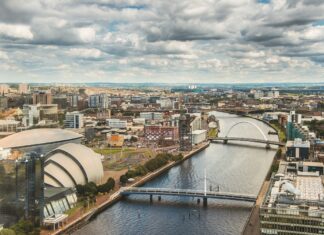
If reading about IWA’s WDCE 2025 has whet your appetite to join water colleagues to progress action on global water issues, you don’t have to wait until the next WDCE to attend one of IWA’s world-class Congresses: why not join us in Glasgow, Scotland, on 4-8 October 2026 for IWA’s World Water Congress & Exhibition. Visit worldwatercongress.org to keep abreast of developments. l
More information
Read the IWA Bangkok Communiqué on Water Security and Resilience at the Congress website, waterdevelopmentcongress.org
Details of the ADB AWDO report can be found at adb.org/awdo/editions/2025