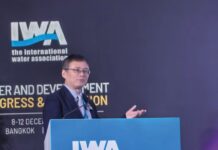
Kala Vairavamoorthy looks at the prospects for the Western Balkans as a region at a defining moment and the role IWA can play in supporting the region’s rethinking of water.
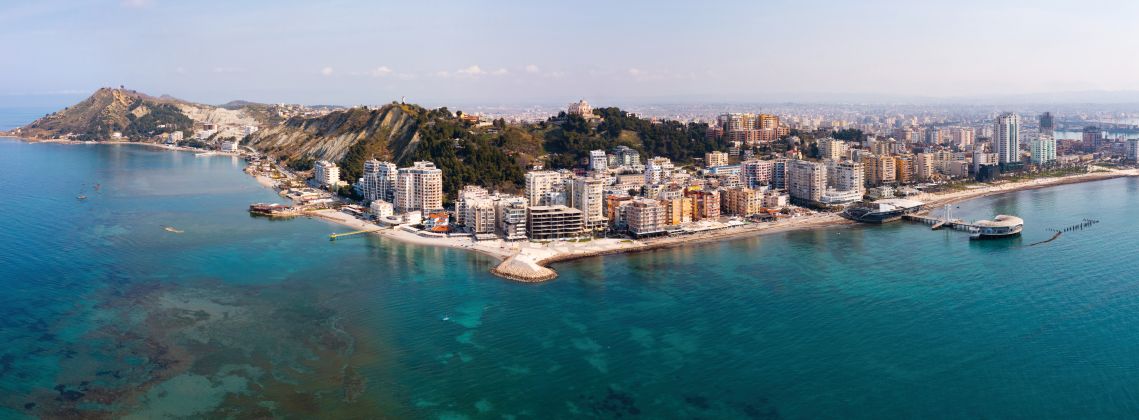
When I travelled to Durrёs, Albania, last November to participate in the 13th Balkans Joint Conference and Exhibition, I expected serious discussions about regulatory alignment, investment gaps and the implications of EU accession. What I did not expect was how deeply inspired I would leave.
Throughout the week in formal sessions, corridor conversations and late-evening meetings with sector leaders, I encountered something that went far beyond compliance frameworks or infrastructure planning: a region alive with ambition, a water community eager not simply to meet European standards but to transform. A generation of professionals determined to build something better than what they had inherited.
The conference brought together water professionals from across eastern Europe and especially the Western Balkans – a region spanning Albania, Bosnia and Herzegovina, Kosovo, Montenegro, North Macedonia and Serbia, sitting at the intersection of infrastructure transformation and European integration. Across the Western Balkans, the prospect of EU membership is reshaping policy priorities, investment strategies and institutional reform. But what struck me most was not only the scale of the challenge ahead, it was the spirit with which the region is approaching it.
Having had the privilege of visiting water sectors across many parts of the world, the Western Balkans stood out for a different reason. This is not a sector reluctantly adjusting to external pressure. It is a sector consciously choosing its future.
The pressures driving change
That sense of ambition matters, because the pressures on water and wastewater services across the region are real, compounding and growing. While the six countries differ in governance structures and economic conditions, many operational challenges are shared.
One of the most visible is non-revenue water. Losses remain high, including exceeding 60 per cent in countries such as North Macedonia and Montenegro.
Water supply reliability adds another dimension to the challenge. In Albania, for example, the national average for continuous supply is around 17 hours, with some cities considerably below this. Similar intermittency exists elsewhere during peak demand.
However, a new pathway is possible. When utilities reduce losses, strengthen asset management and improve operational efficiency, a virtuous cycle can emerge – lower costs, better service and stronger financial stability.
The wastewater challenge is equally significant. Across the region, only around 16 to 20 per cent of wastewater currently receives treatment, compared with more than 90 per cent in most EU member states. Expanding treatment capacity remains one of the region’s largest infrastructure priorities.
A rare window for transformation
This recognition of the challenges facing the water sector in the Western Balkans coincides with the region’s most defining strategic ambition: EU membership.
EU accession requires alignment with an extensive body of environmental legislation covering drinking water quality, wastewater treatment, river basin management and environmental protection. For the water sector, this represents transformation on a scale rarely attempted within such a compressed timeframe. Countries across the Western Balkans are progressing along this pathway at different stages.
Despite these differences, the direction of travel is clear. Across the Western Balkans, governments face a shared strategic reality: infrastructure and institutions must evolve rapidly to meet European standards. The European Union’s Reform and Growth Facility is supporting this transition by aligning financial investment with progress in sector reforms and institutional strengthening, helping to accelerate the pace of change.
The scale of transformation required is significant. Wastewater treatment coverage must expand dramatically. Networks must be modernised to reduce losses. Utilities must strengthen governance and financial sustainability so they can manage and maintain the systems being built.
Yet EU accession also creates something rare: the chance to step back and rethink water systems for the long term. In much of the world, utilities operate under constant operational pressure, leaving little space to redesign how systems should evolve. The accession process creates a different dynamic providing the impetus and planning horizon to reimagine the sector.
This matters because the systems being designed today will shape the sector for decades to come. If wastewater is approached only as a liability to be neutralised, infrastructure will follow one trajectory. If it is approached as a resource to be recovered – a source of water, energy, nutrients and materials – entirely different systems begin to emerge.
Seizing the advantage of late movers
As the Western Balkans embarks on a new wave of water investment, it does so at a moment when the global water sector has accumulated more than a century of experience designing and operating large-scale infrastructure. That accumulated experience offers valuable lessons not only about what works, but also about what can be done differently.
Much of the water infrastructure in Europe and North America evolved incrementally as cities expanded and regulatory standards tightened. In many ways, the development of modern water systems in these earlier industrialised economies was one long pilot study. Systems were built large and centralised, prioritising reliability and scale. Over time, operational experience, scientific research and technological innovation helped refine and improve them.
These investments delivered enormous public health and environmental benefits. Yet they also left many countries with water systems that are, in an important sense, well-functioning but unsustainable. Many rely on energy-intensive infrastructure, centralised treatment processes and ageing networks that were never designed for resource recovery, digital optimisation or the uncertainties of climate change.
The Western Balkans therefore finds itself in a position that is both challenging and advantageous. In many cities, wastewater treatment plants are being built for the first time, networks are being redesigned and institutional frameworks are still evolving. This creates a rare opportunity: the chance to design water systems using today’s knowledge rather than yesterday’s assumptions – the very advantage that late movers can seize.
Over the past two decades, innovation in wastewater treatment has begun to reshape the underlying physical and biological dynamics of treatment processes.
For more than a century, the sector’s mission was to treat and safely discharge. Increasingly, however, wastewater is understood as a source of recoverable value. When viewed through this lens, treatment becomes only part of the story. Wastewater infrastructure begins to resemble a production platform, a place where valuable resources are extracted while environmental protection becomes the co-benefit.
If systems are designed around disposal, recovery becomes an afterthought. If they are designed with recovery in mind from the outset, the entire treatment chain, technologies, partnerships and even financing models can evolve differently.
The real question, therefore, is not whether the region will build new infrastructure – that is already under way – but whether it will replicate the systems of the past or design the next generation of water systems from the outset.
This is the opportunity and the responsibility that the current moment presents: not simply to catch up, but to leap forward and design the water systems of the future.
Building next-generation water systems
That leap is already beginning to take shape across the region and what was demonstrated in Durrёs offered a glimpse of what the future could look like in practice.
The treatment plant in Durrёs is currently the only facility in Albania fitted with technology for biogas production, providing a future reference point on how treatment plants can generate electricity while lowering operating costs. The Skopje wastewater treatment plant, now under construction in North Macedonia and designed to serve around 650,000 people, goes further still. Through a combination of biogas utilisation and other renewable energy sources, the facility is expected to generate more electricity than it consumes.
Nature-based solutions offer another pathway. The constructed wetland in Kramovik village in Kosovo illustrates how such approaches can expand wastewater coverage in smaller settlements while keeping systems affordable and manageable.
Digital technologies represent another powerful opportunity, especially in a region with high non-revenue water. In Prishtina, a pilot district-metered area using acoustic noise loggers significantly reduced losses in part of the network. In Gjilan, the utility KRU Hidromorava has developed GIS-based asset management systems to monitor network performance and prioritise infrastructure renewal.
More broadly, these developments reflect a shift towards integrated urban water management, where water supply, wastewater, stormwater and reuse are treated as interconnected elements of a single urban water cycle. In an era of increasing climate variability and constrained public finance, this kind of systems thinking is no longer optional, it is essential.
The question now is how these emerging approaches can be supported and scaled across the region.
Connecting regional ambition with global expertise
These innovations raise an important question: how can this transition best be supported?
The region is expanding water infrastructure at a time when the global water sector itself is undergoing rapid technological and institutional change. Utilities must not only close long-standing infrastructure gaps but also adopt new approaches and system innovations. Navigating this transition, therefore, requires more than financing and engineering capacity, it also requires access to global knowledge, experience and professional networks.
This is where organisations such as the International Water Association can play an important role.
Through its global community of researchers, practitioners, utilities and policymakers, IWA connects expertise across many of the core disciplines shaping the sector’s evolution and counts a growing number of Governing Members across the region, along with an expanding membership base.
During my visit, discussions about how IWA could support the region led to the idea of a triangular partnership linking IWA, the European Water Association (EWA) and the International Association of Water Service Companies in the Danube River Catchment Area (IAWD).
Each organisation brings complementary strengths: IAWD contributes deep regional engagement and experience in utility capacity building across the Danube basin; EWA informs and influences European water policy; and IWA provides the global technical platform connecting research, innovation and operational practice across continents.
Together, these organisations can align regional engagement, policy influence and global expertise in support of the region’s transition.
The professionals I met are eager to engage with peers around the world. If approached with openness and mutual respect, the Western Balkans will not simply benefit from the global water community, it will help shape it.
The young professionals driving change
After discussing institutions, knowledge networks and collaboration frameworks, it is easy to overlook a simple truth: the most important asset in any sector is people.
One of the most memorable parts of my visit to the Balkans Joint Conference was the time I spent with the region’s Young Water Professionals. I had been invited to address them expecting energy and enthusiasm. What I encountered was something even more encouraging: clarity of vision.
These young professionals are technically strong, internationally connected and deeply committed to improving water services in their countries. They spoke confidently about digital water management, non-revenue water reduction, water reuse, energy efficiency and climate resilience. Many are already working directly with utilities, consulting firms and water associations, applying these ideas in practice rather than simply discussing them in theory.
Across the region, there is a strong sense of initiative among young professionals. In Kosovo in particular, the Young Water Professionals network has demonstrated how a well-organised and proactive community can engage directly with utilities, professional associations and sector institutions. By organising technical events, building professional networks and participating actively in sector discussions, they are already contributing to the evolution of the water sector rather than observing it from the sidelines.
In many parts of the world, utilities worry about succession planning. In the Western Balkans I saw a generation that is not only ready, but eager.
They are not simply studying the sector. They are already helping to transform it.
A call for partnership and action
One of the most humbling aspects of my visit to the conference in Durrёs was the respect shown towards IWA. In conversation after conversation, water professionals spoke about how important it would be for the association to engage more actively in supporting the region’s transition. For many, IWA represents the global home of technical knowledge and innovation in water.
For me, that was both moving and clarifying. The professionals I met were seeking genuine partnership – grounded in professional exchange, mutual respect and shared learning.
At IWA, we intend to respond to that call.
In the coming months, the IWA Secretariat will dedicate focused attention to engagement with the Western Balkans, working to translate the ideas discussed during my visit into practical initiatives that connect the region’s ambitions with the expertise of our global community.
We have also begun discussions with partners about how best to support this transition.
Across the IWA network lies extraordinary expertise. The Western Balkans is a region where this knowledge can make a real difference.
I therefore encourage IWA members to engage with this initiative through technical exchange, collaboration and peer-to-peer partnerships.
Leaving Durrёs, what stayed with me most was a sense of purpose. The Western Balkans is not simply catching up. It is consciously shaping its future.
The window is open. Now is the moment for our community to step forward and help shape what comes next.
The author
Kala Vairavamoorthy is CEO of the International Water Association