
Tripti Kharel, Suman Prasad Sharma, Sanjeev Bickram Rana and Mandira Singh Shrestha highlight the dynamics and challenges of Nepal’s rich water resources.
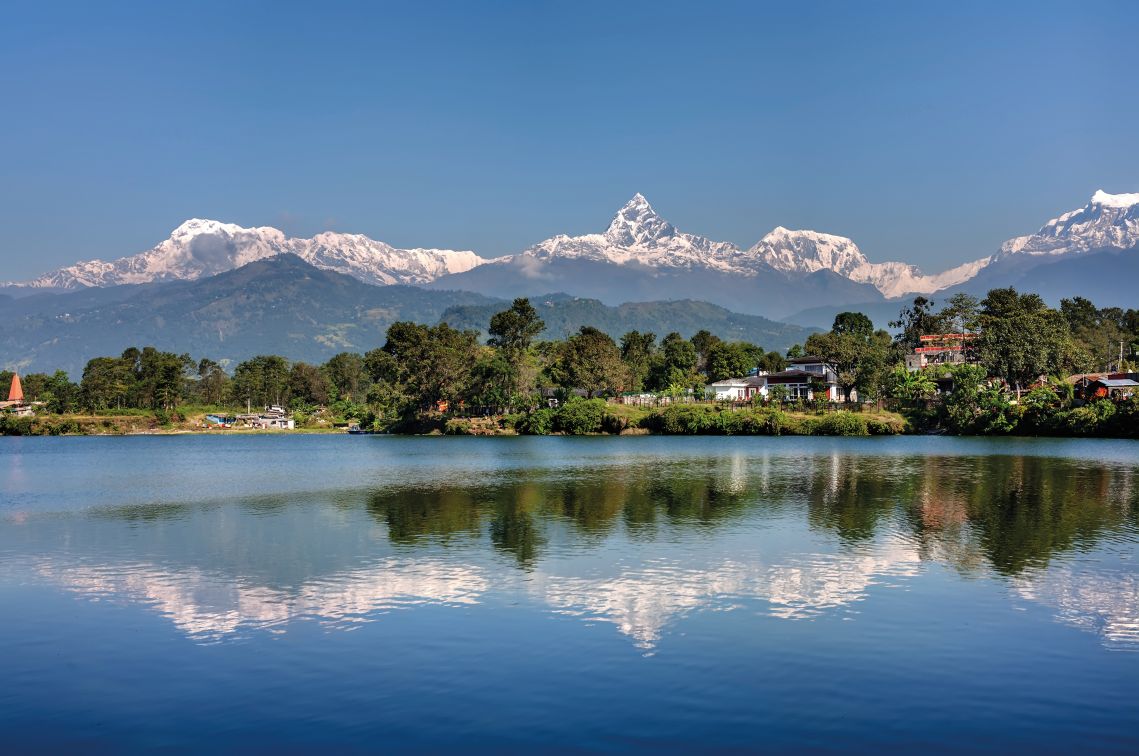
Geographically, Nepal lies at the source of some of South Asia’s most important river systems. Cradled by the Himalayas, it is a land where rivers shape culture, life and hope. Rich in water, it carries both the promise of abundance and the challenge of stewardship.
Its three major river basins – the Koshi, Gandaki and Karnali – are tributaries of the Ganges, and sustain hundreds of millions of people downstream in India and Bangladesh. The country receives an annual average rainfall of around 1500 mm and has more than 6000 rivers and rivulets, giving it one of the highest per capita water availabilities in the region. These resources support agriculture, ecosystems, wetlands and cultural practices that have evolved for centuries. Yet, seasonal variations, weak storage infrastructure and management gaps create chronic water insecurity.
Climate crisis and increasing extremes
Nepal is on the front line of the global climate crisis. The Himalayas are warming faster than the global average. Glaciers are retreating, and extreme weather events such as floods, landslides and droughts are becoming more frequent. Glacial Lake Outburst Floods (GLOFs), shifts in seasonal river flow, and long dry periods now affect not only Nepal’s hydrology, but also its food systems, infrastructure and communities. The country’s Water Resources Policy 2023 outlines pathways for resilience, including adaptive infrastructure, climate-smart irrigation and transboundary collaboration.
Water governance
Water governance in Nepal is shaped by a multi-tiered water governance system, spanning federal ministries, provincial authorities and local governments.
Nepal shares its major rivers, the Koshi, Gandak and Mahakali, with India and downstream Bangladesh, making transboundary water governance a strategic and sensitive issue. Bilateral agreements such as the Koshi (1954/66), Gandak (1959) and Mahakali Treaty (1996) have primarily centred on hydropower infrastructure, irrigation and flood management, often lacking provisions for local consultation or equitable benefit-sharing.
Nepal is advocating for a broader, more inclusive basin approach, one that balances economic use with ecological protection and recognises the rights and voices of riparian communities. Nepal’s engagement in regional dialogues, such as the Koshi Basin Programme Initiative of the International Centre for Integrated Mountain Development (ICIMOD) and the South Asia Water Initiative (SAWI) administered by the World Bank, aligns with IWA’s mission to foster cooperative, science-based water diplomacy.
Hydropower: goldmine to green grid
Nepal is often called a ‘hydropower goldmine’, with its rivers meeting domestic energy demands and enhancing regional energy security. In recent years, Nepal has achieved major milestones, accelerating hydropower development and beginning electricity exports to India, along with regional energy trade with Bangladesh. Large hydropower projects such as the publicly funded Upper Tamakoshi (456 MW) and private ventures such as Arun-3 (900 MW) and Upper Karnali (900 MW) have positioned Nepal as a promising green energy exporter.
However, the journey has not been smooth. Hydropower development has faced challenges, including environmental impacts, community displacement, seismic risks and financing constraints. Climate change also affects the hydrological regime and increases the risk to infrastructure, calling for adaptive climate resilient infrastructure planning and storage schemes.
Irrigation development and progress in Nepal
Nepal is actively accelerating its irrigation expansion to bolster agricultural resilience and food security. Irrigation facilities now cover approximately 1.531 million hectares, with about 612,000 hectares (40%) equipped for year-round irrigation, which represents only 17% of the total cultivable land (NIMIS,2025). Farmer-Managed Irrigation Systems (FMIS), grounded in community leadership, account for around 70% of the country’s irrigated area. In addition, Nepal’s irrigation infrastructure spans more than 700,000 hectares across nearly 6045 systems nationwide. Aligning with national targets for 80% irrigation coverage by 2030, the government is embracing initiatives such as the Babai Irrigation Project’s pilot of real-time flow monitoring and soil moisture sensors, aiming to enhance efficiency, equity and resilience amid climate variability.
Water supply and sanitation: reforms and realities
The Constitution of Nepal (2015) guarantees clean drinking water and sanitation as a basic right. Reforms through decentralisation and community-led models have empowered local groups to manage services, supported by major projects such as Melamchi and international partners. Yet challenges remain in ensuring quality, sustainability and equity, particularly for marginalised and remote communities. In cities such as Kathmandu, scarcity, intermittent supply, ageing infrastructure and aquifer depletion continue to strain water systems.
A legacy of local leadership
Community-led models are central to Nepal’s water management. For decades, water user committees, often led by women, have managed rural drinking water, small irrigation and spring-fed systems, drawing strength from social cohesion, local knowledge and legal recognition. These systems are vital in remote areas where centralised infrastructure is impractical. The government now seeks to modernise them through capacity building, technical support and incentives, while safeguarding grassroots ownership. Nepal’s bottom-up governance offers valuable lessons for IWA members, especially in regions where formal institutions are still developing.
Water supply and sanitation budget
For the fiscal year 2025/26, the government of Nepal has allocated NPR 33.89 billion ($256.52 million) to the Ministry of Water Supply – double the previous year’s budget. The investment prioritises major national drinking water and sanitation projects, with particular emphasis on the Kathmandu Valley, climate-resilient systems, urban sewerage networks, and lift water supply schemes in Karnali. However, Nepal needs steady annual investment aligned with the WASH Sector Development Plan (2016–2030). A financing gap widens the distance to universal access by 2030, requiring even greater future investment and reforms.
Knowledge, youth and innovation
With more than half of its population under the age of 25, Nepal’s demographic profile is favourable for innovation. Universities such as Tribhuvan, Kathmandu and Pokhara have expanded research programmes in hydrology, environmental engineering and water governance. Young professionals are also increasingly engaged in global networks such as IWA’s Young Water Professionals Nepal, contributing to dialogues on water, sanitation and hygiene (WASH) services, the circular economy, and utility reform. Investing in this human capital is vital for sustaining innovation and adaptive capacity.
Nepal as an IWA Governing Member
In 2023, Nepal joined IWA as a Governing Member, timely recognition of its growing commitment to global water dialogue and sustainable development. As a Governing Member of IWA, Nepal is poised to play a vital role in addressing the water-related challenges associated with the impacts of climate change and in promoting sustainable practices within the region. This relationship brings to the global stage critical themes, such as the safeguarding of the Himalayan water towers that are vital to South Asia, promoting community-led governance, advocating upstream perspectives in transboundary cooperation, enhancing mountain resilience, advancing wastewater reuse, and strengthening local capacity. Nepal is prioritising active participation in IWA’s strategic platforms, with emphasis on resource recovery, circular economy approaches, climate adaptation, nature-based solutions and urban water resilience, while also expressing interest in co-hosting regional dialogues to reinforce South Asian collaboration under the IWA umbrella.
Authors:
Tripti Kharel is Environment and Sanitation Section Head of the Kathmandu Valley Water Supply Management Board; Suman Prasad Sharma is former Secretary of the Government of Nepal and Chairperson of Water Forum Nepal; Dr Sanjeev Bickram Rana is Executive Director of the Kathmandu Valley Water Supply Management Board; and Dr Mandira Singh Shrestha is Executive Member of Water Center 21 Pahal