
IWA’s Leading Edge Conference on Water and Wastewater Technologies held in Houston earlier this year reached a special milestone – and showed how this event for technology and innovation has never been more relevant.
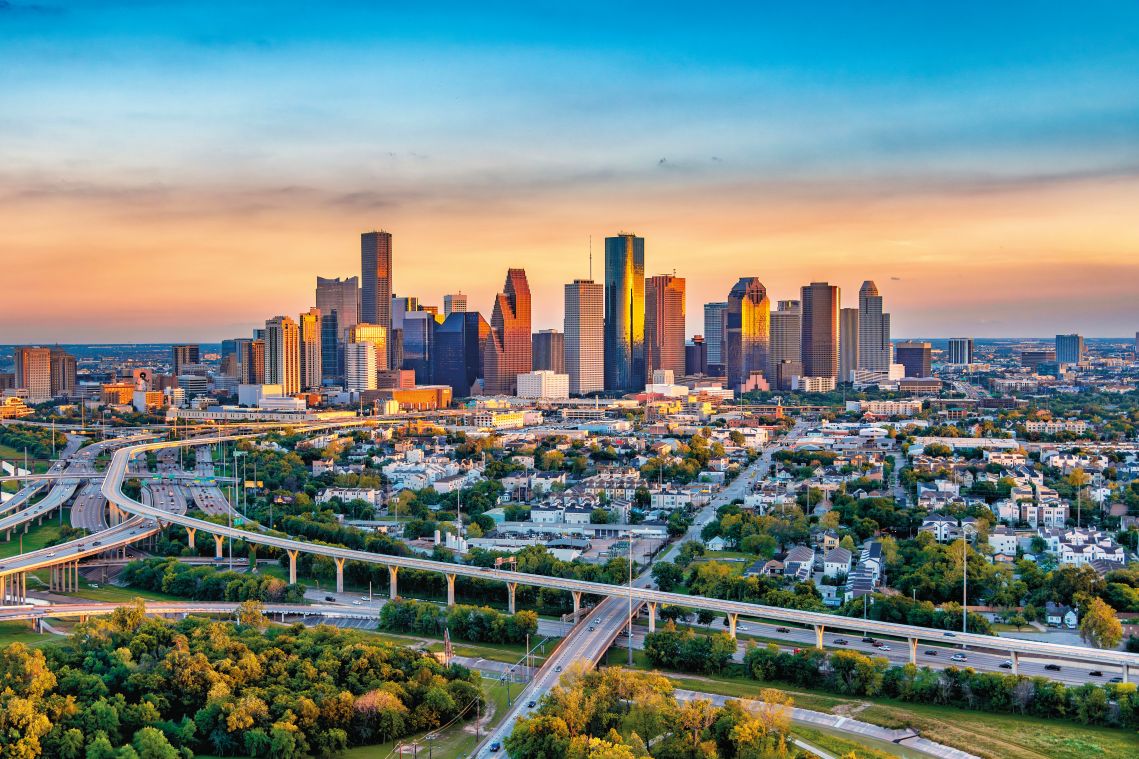
The 20th anniversary edition of IWA’s Leading Edge Conference on Water and Wastewater Technologies (LET) was held on 1-5 June at Rice University’s WaTER Institute in Houston, Texas.
It’s a place renowned for its dedication to fostering entrepreneurship in the water technology sector, providing a platform for individuals and companies to progress innovative water technologies and creating the vital opportunities required to bridge the gap between groundbreaking research and practical applications.
In this dynamic environment, LET welcomed scientists, engineers, industry leaders and practitioners from across 27 countries, providing a unique global platform for water sector professionals to explore the latest innovative ideas, share expertise and connect with fellow industry professionals.
Curated by an expert programme committee, each session was designed to offer a cohesive and engaging dialogue, featuring influential voices at the forefront of water technology and innovation, with the programme reflecting global and regional priorities to ensure relevance to the diverse contexts and challenges faced by the industry today.
Resilience is the name of the game
Exploring the theme of ‘Resilient water in a changing world’, this edition of LET focused on the water challenges being faced across the globe, covering subjects such as water security, net-zero and PFAS. Pedro Alvarez, George R Brown Professor of Civil and Environmental Engineering and director of the Rice WaTER Institute, opened the conference by noting: “Today’s theme of resilient water in a changing world is a timely subject.”
Rice President Reginald DesRoches’ address stressed the necessity of collaboration in addressing current and future global water challenges, emphasising the need for a multifaceted approach. “Water is fundamental to human health, economic prosperity, environmental sustainability and quality of life, yet around the world communities are grappling with growing pressures on water systems, from population growth and ageing infrastructure to emerging contaminants, extreme weather events and the impacts of climate change,” he said. “These challenges are complex, and no single institution, sector or nation can solve them alone. That is why gatherings like this one are so important. They create opportunities to share knowledge, challenge assumptions, build partnerships and accelerate the development of solutions that can improve lives around the globe.”
Opportunities for discovery
The event included plenary talks, technical sessions, workshops, poster presentations and industry tours designed to bridge the gap between scientific discovery and real-world implementation. Participants were able to immerse themselves in the Houston experience with a private tour of the NASA Johnson Space Center, exploring its historic Mission Control, astronaut training facilities and Rocket Park led by expert guides sharing insider insights. This ‘out of this world’ experience was further enhanced by the opening plenary address given by NASA astronaut Tracy Caldwell Dyson. With a PhD in chemistry, she was selected as an astronaut by NASA in 1998. Logging a total of 373 days in space, including more than 23 hours in four spacewalks, Dyson flew aboard the space shuttle Endeavour on STS-118 in 2007 serving as a mission specialist, served as flight engineer for Expedition 23/24 in 2010, and most recently spent six months aboard the International Space Station conducting scientific experiments.
Her presentation on water recovery and recycling aboard the International Space Station highlighted the ground-breaking technologies required to sustain human life in space. Having viewed the planet in a way few of us ever will, she was able to share her unique perspective gained from orbit of the wonder of Earth’s vast interconnected water systems that support all life on this fragile ecosystem that we call home.
A suite of impactful plenary presentations followed. Tackling the challenges here on Earth, Mark van Loosdrecht, of Delft University of Technology, Netherlands, spoke on recovering valuable materials from wastewater before Amanda Lake, chartered chemical engineer and Global Principal for water resource recovery at Jacobs, UK, covered sustainability and the drive to reduce greenhouse gas emissions from wastewater treatment plants.
Following this, Amy Childress, Walt Singer Endowed Chair in Civil and Environmental Engineering and Director of the ReWater Center at the University of Southern California, spoke on water security and the opportunities to integrate alternative water sources to improve the resilience of potable supplies. Water market expert Christopher Gasson then discussed the future of desalination as a tool for sustaining supplies – a significant theme as countries grapple to deliver water for drinking and irrigation within the context of growing populations and a warming, more drought-prone climate.
The importance of desalination and water reuse was also highlighted by Menachem Elimelech, the Nancy and Clint Carlson Professor of Civil and Environmental Engineering and Director of Rice’s Center for Membrane Excellence. A leading expert in the field, he emphasised the need for new membrane materials to advance desalination and water reuse technology, enabling water to be used from less conventional water sources such as seawater, brackish water, agricultural runoff, and industrial and municipal wastewater. He said: “What we need is true molecular design. We need to design membranes from the bottom up rather than relying on materials that are more than 50 years old. That’s how we’ll overcome the limitations of today’s desalination and water treatment technologies.”
Workshops and technical sessions
In addition to these inspirational big picture discussions, workshops covered topics ranging from produced-water desalination and distributed treatment systems to AI, advanced pollution mitigation technologies and pathways towards net-zero wastewater treatment operations. Technical sessions explored emerging membrane technologies, direct potable reuse, PFAS destruction, decentralised treatment systems, digitalisation and automation, nutrient removal, and energy-neutral wastewater treatment. Demonstrating the popularity of the event, important innovations driving solutions to the global water and wastewater challenges were highlighted, with more than 110 research projects showcased through poster presentations.
Technical tour
Exploring the opportunities and challenges of taking research from theory to the implementation of real-world technology, participants were also able to attend a technical tour of the US headquarters of Grundfos in Brookshire, Texas, receiving a behind-the-scenes look at the company’s integrated production assembly and learn about its engineered-to-order capabilities.
All-in-all this special anniversary edition of LET again delivered on the high expectations of the LET series. Building on this success, plans are already under way for LET 2027 that will take place in Ghent, Belgium, on 24-28 May. This 21st edition will be a must-attend event for those wanting to stay abreast of cutting-edge water and wastewater technology and network with like-minded professionals.
More information
To keep updated on details of LET 2027 in Ghent, Belgium, visit iwa-let.org