
IWA’s Alliance for Water Sensitive Design & Planning Working Group sets out core principles for applying nature-based solutions in diverse contexts.
Across the globe cities are discovering a sobering truth – engineering alone cannot solve urban flooding. While blue-green infrastructure (BGI), sustainable drainage systems (SuDS), and nature-based solutions (NbS) are celebrated in theory, in practice the feasibility of water-sensitive design is governed by political capacity, spatial scarcity, historical land tenure and community trust. Where ideal conditions do not exist, forcing traditional engineering models guarantees failure. Instead, urban water leaders must create phased, multi-actor pathways tailored to socio-spatial realities.
Cross-border lessons from the UK, Brazil and India
At the IWA Water and Development Congress and Exhibition in Bangkok, Thailand, a design workshop examined this challenge through three landscapes:
- Tenbury Wells, Worcestershire, UK: A heritage-constrained town facing river confluence flooding.
- São Carlos settlement, Franco da Rocha, Brazil: An informal hillside occupation exposed to compound floods and landslide risks.
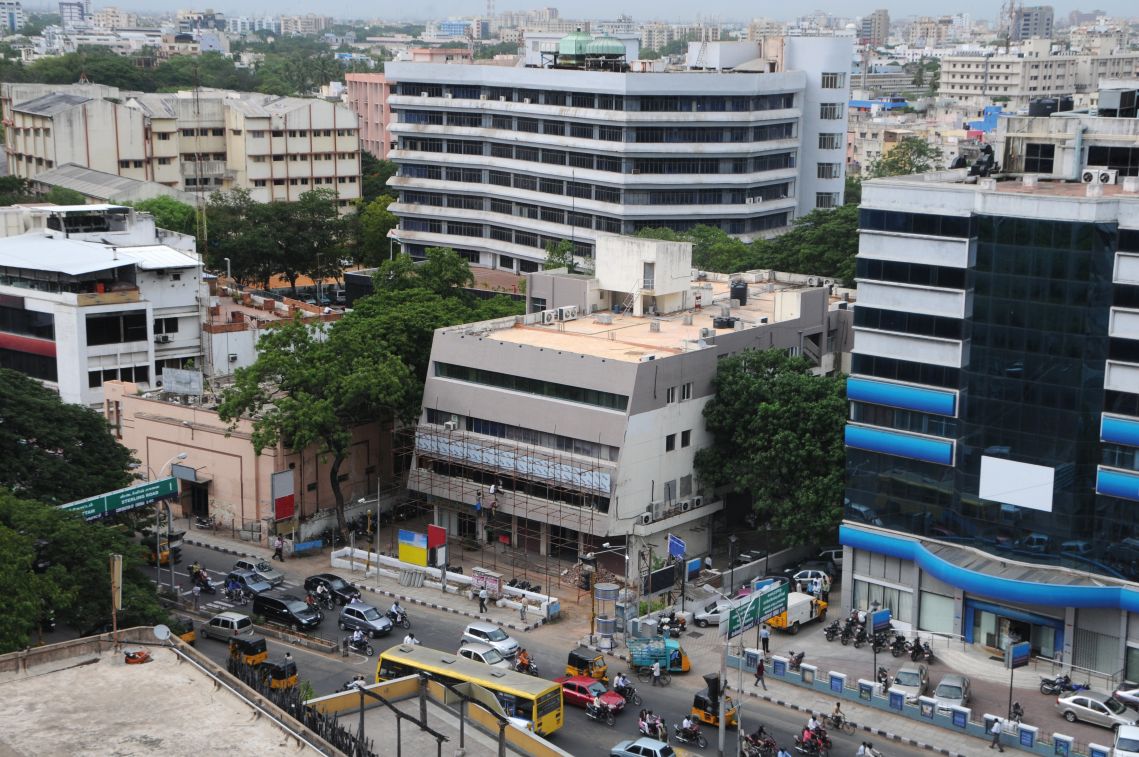
- Seethammal colony, Chennai, India: A hyper-compact urban district struggling with a scarcity of space and waste-drainage cross-contamination.
The goal was to harvest insights between the Global North and South. Water sensitivity is essentially a socio-governance challenge. When designs ignore housing, heritage or waste management, infrastructure fails.
Frontlines of practice
Case 1: Tenbury Wells, Worcestershire, UK
The challenge: Frequent one-in-10-year flooding at a river confluence, severely constrained by historic preservation laws and tight urban space.
Proposed interventions: Upstream river terracing, daylighting culverts, and engineering streets and play area as temporary conveyance and retention networks.
Case 2: São Carlos settlement, Franco da Rocha, São Paulo, Brazil
The challenge: Informal hillside occupation exposed to compound flood, landslide and heat risks on steep, low-infiltration slopes.
Proposed interventions: Phased stepped detention basins serving as recreational areas, with housing realignment and slope reforestation.
Case 3: Seethammal colony, Chennai, India
The challenge: Extreme urban density, massive impervious cover and stormwater mixing with sewage and solid waste.
Proposed interventions: Dual-use streets acting as managed flow paths, building code revisions tied to redevelopment cycles, and waste-drainage integration.
What travels across contexts? Five core principles
Despite differences in economic development, administrative capacity and climate regimes, the studies revealed common lessons for implementing BGI, SuDS and NbS:
- Phasing as strategy: Durable interventions begin with immediate risk reduction – such as temporary detention basins or dual-use street conveyance – while laying the groundwork for long-term stream daylighting, housing relocation, or slope stability through reforestation.
- Designing for multi-functionality: In land-constrained cities, single-purpose flood infrastructure is an unaffordable luxury. Repurposing parks and sports grounds as temporary retention zones unlocks urban space and builds community value.
- Community trust and risk literacy: Public engagement is a core design requirement. Co-documenting historical flood memory and clarifying differences between pluvial and fluvial risks builds local ownership and ensures long-term asset maintenance.
- Cross-policy alignment: Water interventions succeed only when linked to non-water agendas. In Brazil drainage hinges on housing policy; in the UK on heritage negotiation; and in India on integrating solid-waste and sanitation management.
- Candid sequencing: Calling out unfeasible options early prevents costly failures and redirects efforts towards establishing the prerequisite conditions.
Bridging the North-South divide
Learning between regions must be genuinely reciprocal:
- North–South exchange: South cities operate where adaptability and spatial compromise are survival skills. This ‘living with water’ paradigm offers North practitioners a way out of protection-only engineering deadlocks.
- South–North exchange: Conversely, Northern experiences provide valuable governance scaffolding – such as statutory partnerships and blended financing mechanisms – that can strengthen Southern initiatives when adapted to local political realities.
- South–South exchange: Brazil’s housing-led ecological restoration strategies provide a practical model for India’s dense urban wards, while India’s integration of public health and solid waste management offers crucial lessons for Latin America.
The South’s experience managing spatial constraints shows how urban design can accommodate periodic water flow, complementing Northern frameworks.
Call to action for IWA members
Four collaborative pathways:
- Share practical solutions/interventions: Connect teams in historic towns, informal hill settlements, and high-density wards to co-develop monitoring and risk-management tools tailored to tight spaces.
- Align water policies with urban reality: Work across sectors to build adaptive building codes that integrate flood management directly with housing policy, heritage protection, and waste management.
- Exchange field personnel on the ground: Swap engineers, planners, and community teams to create playbooks for sequencing water infrastructure in crowded and informal neighbourhoods.
- Test public spaces globally: Build multi-functional spaces – streets that double as flood channels or schoolyards storing rainwater – measuring impact on flooding, drought, heat and community wellbeing.
What travels across borders is not a fixed catalogue of planning codes, but a dynamic methodology – phase strategically, design multi-functional spaces, plan at the catchment scale, and anchor delivery in community trust. When water professionals stop viewing green infrastructure as purely technical and embed it in social, spatial and political realities, water sensitivity ceases to be aspirational and becomes an achievable standard.
The core principles were developed during ‘Design Sprint: Building Future Water-Sensitive Cities’, a workshop held at IWA’s Water and Development Congress & Exhibition held in Bangkok in December.
The authors:
This article was written by the following members of IWAís Alliance for Water Sensitive Design & Planning Working Group: Maryam Imani, Ana Paula Koury, Nathalia de Mata (YWP), Suresh Kumar Rohilla, Balaji Narasimhan, M.D.Murty, Chris Maidment, Renato Anelli, Arun Rajasekaran Sankarbalaji (YWP), and Elanchezhiyan Duraisekaran (YWP)